
Who am I?
Whether you are a parent, a student, or a colleague, it is important for us to develop a positive, productive relationship built on trust. I hope that by sharing something about myself, my course, and my goals, we can take the first step in building that trust together. My name is Richard Stefano, and I’m the English Reading teacher in our IB World program at _______ Middle School. I’ve recently completed a Professional Masters of Education program at Queen’s University, and am currently enrolled in an IB Educator’s course from the University of Western Ontario. I have been a teacher here for nine years, and have had many wonderful experiences getting to know my colleagues, students, and students’ parents and guardians.
IB Mission-aligned
My course uses Key and Related Concepts from Language and Literature, teaches ATL and higher-order reading skills, and uses IB criteria to help students develop into lifelong, self-regulated learners and positive, caring people. I provide English language and personalized support based on students’ specific needs, and work hard to ensure every student has a voice in my classroom.

IB Learner Profiles
My course emphasizes the IB learner profiles, both by teaching content related to them, and by modelling and identifying positive behaviours and connecting them to the profiles.
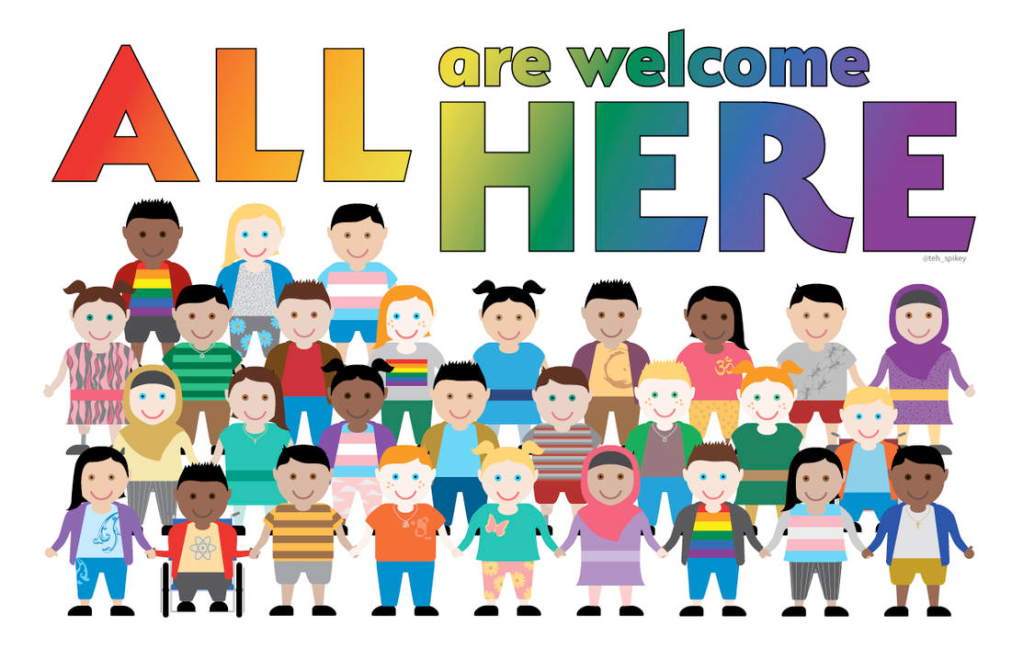
Diverse and Inclusive
My first priority is personalizing my course for each new group of students. That includes using a variety of language-support and scaffolding practices, but also meeting regularly with students to discuss their needs and interests. Students are encouraged to bring their personal perspectives and cultural experiences into class discussions and activities.
My class emphasizes authors and content from and about different cultures and backgrounds, and I encourage the use of inclusive and supportive language with my students. As a foreign teacher, I help bring a different perspective to our classroom, but so do each of my students. Culturally-responsive teaching means my students are at the centre of each class, both as learners and as people (Kennedy-White et al., 2005).
Language and Literature Concepts and Skills
As a foreign teacher, I work with the other foreign teachers and Chinese-English teachers to create a shared understanding and language around our English courses. Each IB command term, ATL skill, and IB Criterion is discussed and standardized by our English team, so each student is receiving fair, accurate, data-based feedback regardless of who their teacher is. Beyond that, we give our students a voice in the classroom, and take their feedback to our professional learning communities to further develop our shared understanding.

Unit Example
Here is an example of the types of activities used in my class. This is from a unit taught to my Grade 7 students in second semester. Students will be assessed based on their Analyzing and Organizing IB Criteria, and will use Communication, Collaboration, and Critical Thinking ATL Skills as they work individually and in small groups.
Inquiry 1: Before reading the articles, students will analyze small pieces of paper with parts of an article written on them (ex. a heading). Students are introduced to the relevant key non-fiction terms. Students start by matching the headings to the appropriate paragraphs. Then students can organize the pieces however they choose on the whiteboard using magnets. Students then justify and discuss their choices with the class.
Inquiry 2: Using two articles from the coursebook as a starting point, students can comment on the design and content of other articles. Students should consider different ways to categorize them and discuss the effectiveness of the design choices and the relationship between writing style, design, and topic. This can include articles from history, and students can discuss how our understanding of environmental sustainability might change how we read them. For modern articles, students consider how our understanding might change the same way in the future.
Inquiry 3: Summative Assessment: In small groups, students will choose a topic related to the environment and be given research time or a set of sources to look through. They will collect information and present a design of their intended article. They will write and design their article (or another form of media if they have another preference) and write a short rationale for their design choices.
Learning outcomes: Students will be familiar with the key non-fiction terms needed to understand and discuss non-fiction articles. Students will be able to write and design a non-fiction article and justify their design choices. Students will develop their collaborative and communication skills, as well as synthesizing knowledge across multiple courses and activating prior knowledge.
My Professional Development
I try to engage in lifelong, self-regulated learning habits for my own development and to model positive behaviours for my students and colleagues.
Experience: I have worked for nine years at this school, even before it adopted the IB programme. I taught the first group of IB students at this school, and have worked closely with my colleagues to collaborate on unit planning and resource sharing.
Professional Masters of Education: During the coronavirus lockdown period, I completed a graduate program at Queen’s University. The program provided me with a support structure for developing my course and helped me establish my self-regulated learning skills and routines.
IB Educator Certificate: I’m currently completing a program designed for teachers currently working at or planning to work at an IB school. This program has provided me with guidance on how to further integrate the IB framework into my course in terms of the mission of the IB programme and in the specifics of unit planning, data collection, and learning outcomes. Below are links to some of the learning I engaged in during each module:
Module 1: Introduction to IB Philosophy and Programme Components
Module 2 and 3: Teaching and Learning, Assessment, Evaluation, and Student Feedback
Module 4: Module 4: Professional Learning
I hope you’ve enjoyed reading this page, and that it will help you get to know me, the IB Programme, and my course a little bit better!
References
Programme Standards and Practices. (2020). International Baccalaureate. International Baccalaureate Organization (UK) Ltd.
MYP: From principles into practice. (2022). International baccalaureate. International Baccalaureate Organization (UK) Ltd.
Kennedy-White, K., Zion, S., Kozleski, E. (2005). Cultural Identity and Teaching. On Point. National Institute for Urban School Development.
Language and Literature Guide (2014). International baccalaureate. International Baccalaureate Organization (UK) Ltd.
The images on this and connected pages all fall under Creative Commons License and can be found by clicking here.
https://www.needpix.com/photo/1667422/cycle-five-primary-stage-template-free-vector-graphics
https://www.pickpik.com/amazing-beautiful-beauty-blue-breathtaking-calm-94
https://granitebaytoday.org/first-merged-cp-and-ib-english-class-emerges/
https://www.deviantart.com/mquell/art/IB-Learning-Profile-Infographic-Posters-684464565
https://pxhere.com/en/photo/1001973
https://www.flickr.com/photos/wildrose115/24767545586
https://www.deviantart.com/tehspikey/art/School-Diversity-Poster-658640450
 Richard Stefano - PME Course progress