What I found most interesting when I did my Masters and when I started learning about the IB program, was how much it helped to have names for all the skills, concepts, and approaches I was using or was learning about. The IB program has benefited me the most (so far!) simply by giving me the language to talk about my course and justify my teaching approaches. When I do that, I also see where I’m lacking, and where I can become more IB-aligned, use more inquiry-based learning, and explicitly teach the students concepts and ATL skills. As a result, my first two artifacts are for reference.
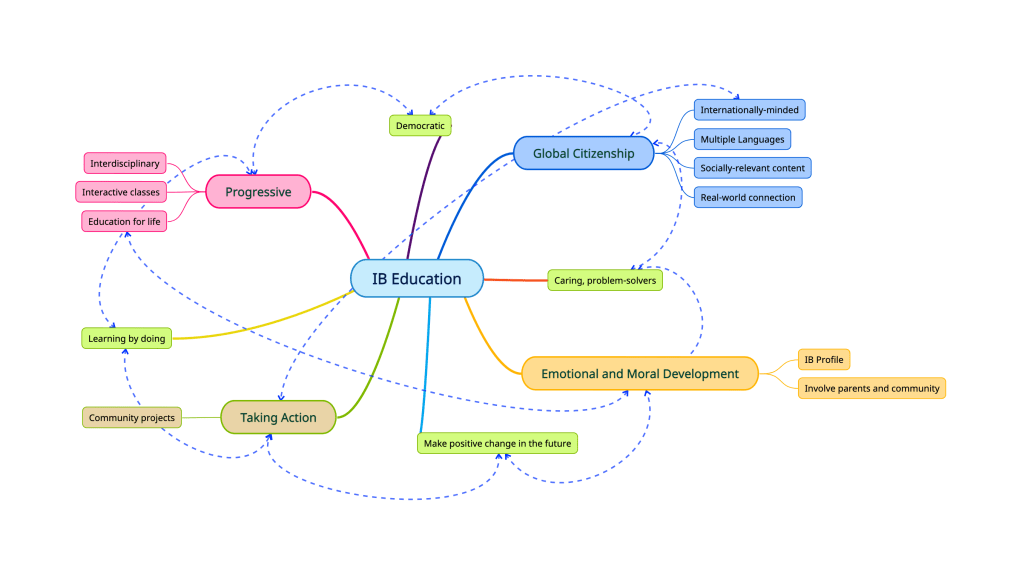
One, on the top right, is what I created in this course, which helps me understand the broad strokes of the IB program and why I’m doing what I’m doing.
The second, on the bottom right, is a reference I’ve been using since I started implementing the IB framework into my course. As an example of how I use this reference guide, I was teaching a unit based on a story from a coursebook. As a result, I felt I was putting the concepts and contexts on top of an existing course. I checked the reference guide and struggled to find the right concepts, contexts, and assessment criteria to describe my unit. I realized that 1: this was an issue with my unit, and I needed to work harder to connect the unit to the real-world and big ideas, and 2: the concepts, contexts, and assessment criteria were flexible enough that they could apply to many different approaches. I could even pull from other disciplines!
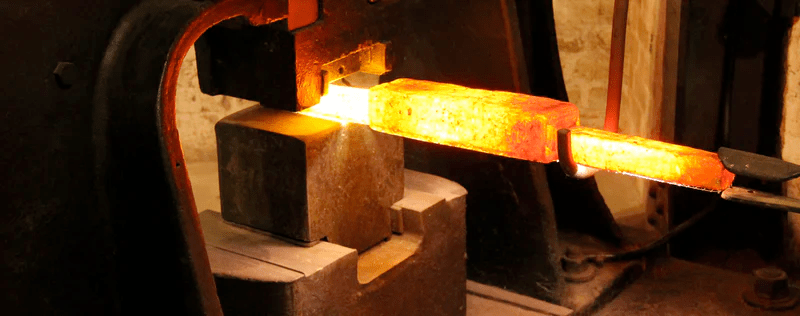
The final artifact – on the left – is a little silly, but I keep coming back to the word “refine”. As I keep learning more about the IB program and going back to my course, I keep finding pieces to cut out or adapt, and I keep feeling like my course is getting “sharper”. So I’ve included a picture of someone refining a piece of metal into a sword!

 Richard Stefano - PME Course progress